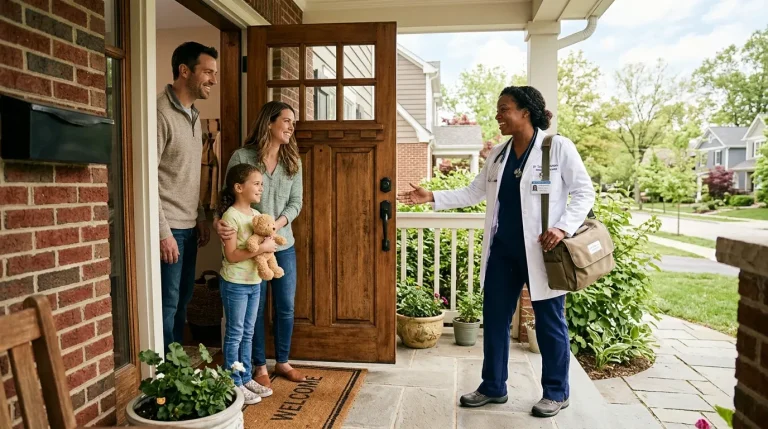
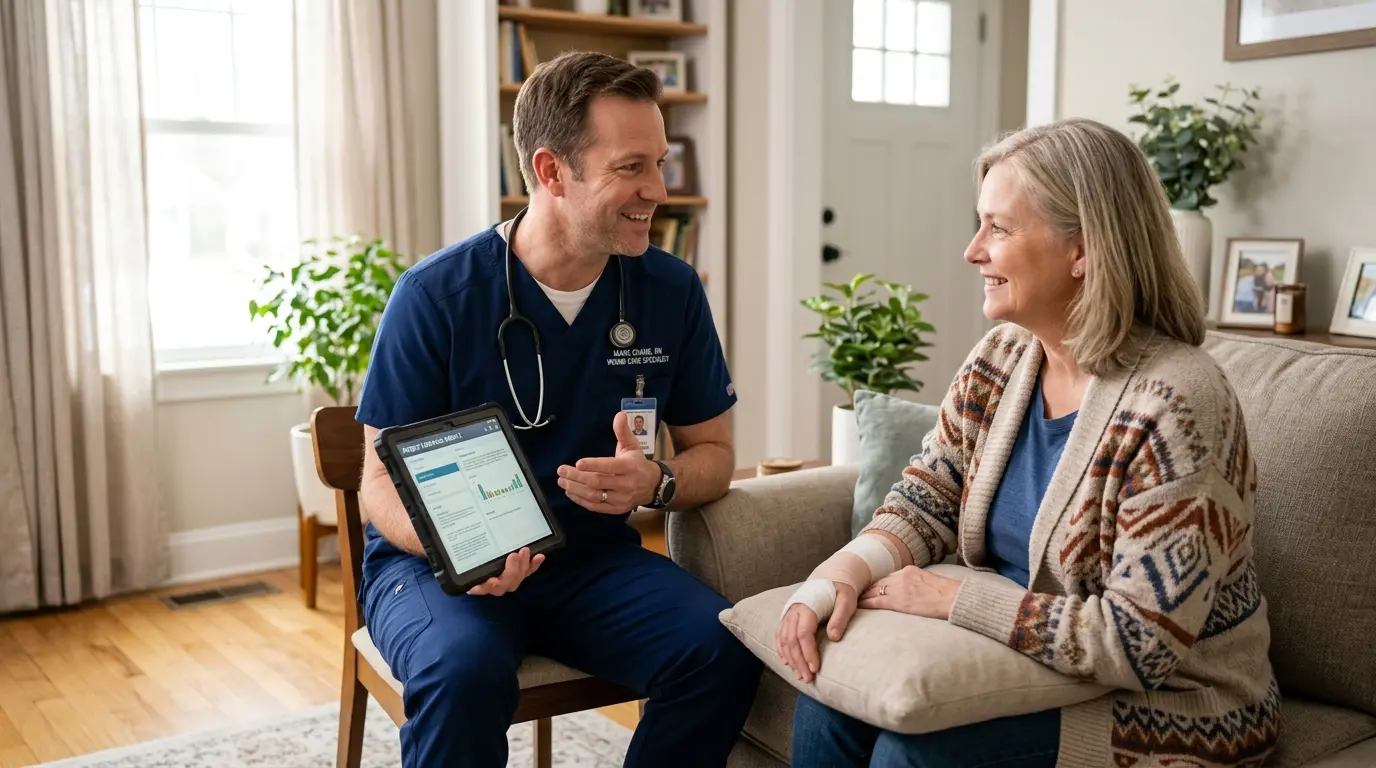
Wound management services bring professional assessment, treatment, and monitoring directly into a patient’s home. A physician evaluates the wound, builds a treatment plan, and tracks healing over time. Seniors, homebound patients, and people with chronic wounds often benefit most. This guide explains what these services include, who typically qualifies, and how to find a provider in Michigan. Understanding these details can help families make a more informed decision about the right next step.
What Are Wound Management Services at Home?
This model combines professional evaluation with ongoing physician oversight. Physician-led wound care differs from basic wound dressing. Basic dressing only covers a wound without addressing why it isn’t healing. An in-home wound care physician can identify the underlying cause during the first visit.
A typical visit includes wound monitoring, dressing management, and infection monitoring. The physician also builds a personalized wound care plan based on the patient’s health history. Home-based wound management brings this structure into the patient’s own space, without requiring travel to a clinic. Each visit builds on the last, creating a clear record of progress over time. This continuity often matters as much as any single treatment decision.
Who Can Benefit From Wound Management Services at Home?
Several patient groups tend to benefit most from this model of care. Recognizing these categories can help families decide if home-based treatment fits their situation.
- Seniors managing age-related skin changes
- Homebound patients unable to travel safely
- Patients with limited mobility or transportation barriers
- Patients recovering from surgery, needing post-surgical wound care
- Patients with chronic wounds that resist normal healing
- Patients with diabetic wounds requiring close monitoring
- Patients with pressure injuries needing consistent pressure wound care
- Patients with complex wound-care needs involving multiple conditions
Not every patient needs this level of care. A physician determines eligibility based on the wound’s severity and the patient’s overall health. This individualized review helps ensure the care model truly fits the situation. Families often gain peace of mind once a physician confirms this fit clearly.
What Treatments Are Included in Home Wound Management?
Treatment varies by wound type, but several core services appear across most care plans. A physician tailors the exact combination to each patient’s specific needs.
Wound Assessment and Monitoring
A physician examines wound size, depth, and tissue condition during each visit. This wound assessment guides every treatment decision that follows. Regular monitoring helps catch complications before they worsen. Consistency across visits often reveals patterns that a single appointment would miss. Physicians also track how well a wound responds to each stage of treatment.
Wound Cleaning and Dressing Changes
Wound dressing changes use sterile technique to protect healing tissue. The physician selects dressings based on drainage levels and healing stage. Clean technique reduces the risk of introducing new bacteria. Choosing the right dressing type can meaningfully influence recovery speed. Caregivers often learn simple habits that support this process between visits.
Wound Debridement
Wound debridement removes dead or damaged tissue that blocks new growth. Physicians use this technique only when clinically appropriate for the wound’s condition. It often provides meaningful wound healing support and encourages healthier tissue regeneration. Patients typically notice less discomfort once dead tissue no longer interferes with healing.
Infection Prevention and Monitoring
Wound infection prevention involves consistent cleaning and close observation for warning signs. A physician watches for redness, drainage, or unusual odor at every visit. Early detection often prevents a minor issue from escalating. Catching these signs quickly can spare a patient an unnecessary hospital visit. Clear caregiver guidance also helps between scheduled appointments.
Chronic Wound Management
Chronic wound management addresses wounds that fail to heal within a typical timeframe. These wounds often need repeated evaluation and adjusted treatment. Diabetic wound care requires special attention, since diabetes, poor circulation, and pressure all commonly contribute to chronic wounds. A physician adjusts the approach as each wound responds to treatment.
Advanced Wound Care When Appropriate
Advanced wound care may include specialized dressings or additional interventions. A physician recommends this level of care only when the wound’s complexity requires it. Not every patient needs advanced treatment to heal successfully. Simpler wounds often respond well to standard care alone. This measured approach helps avoid unnecessary procedures.
What Are the Benefits of Wound Management Services at Home?
Receiving wound management services at home offers several practical advantages. These benefits often extend beyond the patient to the whole family.
- Convenient access to professional wound care without travel
- Reduced burden for patients with mobility limitations
- Ongoing monitoring between scheduled visits
- Personalized treatment planning based on individual needs
- Stronger continuity of care with one consistent physician
- Care delivered in a familiar, comfortable environment
- Earlier identification of wound complications
- Fewer unnecessary trips to urgent care or the emergency room
These benefits do not guarantee faster healing, since recovery depends on many individual factors. A physician’s honest assessment remains the most reliable guide throughout treatment.

Who Qualifies for Wound Management Services at Home?
Qualification depends on individual medical circumstances rather than a fixed checklist. Each patient’s situation looks a little different, which is why evaluation matters so much.
Physicians typically consider:
- Mobility limitations or difficulty traveling to appointments
- Chronic or complex wounds requiring ongoing attention
- Recovery needs after surgery or injury
- Medical conditions affecting wound healing, such as diabetes
- A clear need for professional wound evaluation and wound treatment
- Difficulty managing dressing changes safely without guidance
- A history of slow healing or recurring skin breakdown
A physician evaluates each patient individually before recommending home-based wound care. This evaluation helps confirm whether the care model fits the patient’s specific situation. Families are often included in this conversation to help set realistic expectations.
How to Choose the Right Wound Management Provider in Michigan
Choosing a provider starts with confirming physician involvement in every visit. This single factor often separates strong wound care from basic dressing support alone. Families should never hesitate to ask direct questions before committing to a provider.
Consider these factors when evaluating a wound care physician or practice:
- Qualified medical professionals leading each evaluation
- Strong assessment skills and careful wound care management
- A personalized care plan built around the patient’s specific wound
- Experience managing complex wound care cases
- Clear communication and coordination with other specialists
- Confirmed availability within your service area
Asking direct questions about scheduling and follow-up care helps set clear expectations from the start. A provider who communicates clearly upfront often proves easier to work with long term.
A first visit typically includes a full medical history review alongside the wound exam. This gives the physician a complete picture before building any treatment plan. Patients should feel comfortable asking about costs, timelines, and what ongoing care will involve. Honest, upfront conversations tend to set the stage for a smoother experience overall.
Caregivers often play an important role between physician visits. Family members can help track changes, manage dressing supplies, and report new symptoms promptly. A physician who welcomes caregiver involvement often supports better communication throughout treatment. This teamwork frequently makes the biggest difference in day-to-day recovery.
Wound Management Services in Michigan
Patients searching for wound care services in Michigan should look for a provider offering physician-led, home-based care. Local availability and consistent scheduling both matter as much as clinical expertise. Visiting Doctor Solutions provides in-home wound evaluation and treatment across several Michigan communities.
Coverage areas include wound care in Lapeer and wound care in Oakland. Patients can also explore wound care in Genesee, along with Macomb, Livingston, and Wayne counties.
Patients researching provider options may also find it helpful to read about choosing chronic wound care. Others may want to find a wound care specialist in Troy. For a broader look at wound care treatment options, explore the full range of available services. Comparing these resources can help families feel confident before scheduling a first visit.
Frequently Asked Questions
What are wound management services?
Wound management services combine professional assessment, treatment planning, and ongoing monitoring. These services suit wounds that need more than basic first aid. A physician typically leads each step of the process.
Can wound management be provided at home?
Yes. A physician can perform wound evaluation, dressing changes, and monitoring during wound care at home visits.
Who qualifies for home wound care?
Seniors, homebound patients, and people with chronic wounds or limited mobility often qualify. A physician confirms eligibility during an initial evaluation. This first visit helps set expectations for the care that follows.
What treatments can a wound care provider offer at home?
A wound care doctor may offer evaluation, dressing changes, debridement, and infection monitoring, depending on the wound’s needs. Treatment often evolves as healing progresses.
When should someone seek professional wound management?
Seek evaluation if a wound isn’t healing within two weeks or shows infection signs. Patients with diabetes or poor circulation should seek care sooner.
Conclusion
This approach offers a practical path for patients who need consistent, physician-led attention. Recovery looks different for every patient, which is why personalized evaluation matters so much. Families often feel more confident once they understand each stage of the treatment plan. Visiting Doctor Solutions provides this kind of home-based support for patients across Michigan. Contact the team to discuss your situation and determine whether wound management services fit your needs.